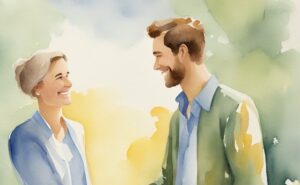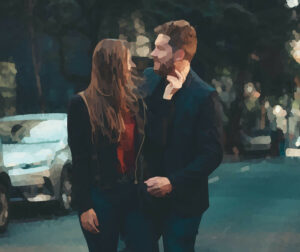
Some Girl(s) is a movie about a "nice guy" who has trouble seeing beyond himself. Though the film revolves around the desires of the central guy, named Man (played by Adam Brody), the moments of emotional depth come from the strong cast of female characters that Man just can't understand.
TheLA Times called it illuminating. The Huffington Post hailed it as inspiring. I call it the nonprofit world's cinematic version of chivalry. New documentary Girl Rising is a problematic implementation of good intentions.
For Girl Rising, 10x10, The Documentary Group, Vulcan Productions, GATHR, CNNFilm, and Intel teamed up to bring us, well, precisely what we might expect from a philanthropic film financed by a subsidiary of the world's largest media conglomerate and a multi-billion dollar corporation.
In a strange expression of boredom, I spent the latter half of The Great & Powerful Oz’s two-hour span counting James Franco’s teeth. He shows them early, eagerly, and often—the healthy expanse of his gums counting for double if you keep score.
I can often gauge the quality of a film by the length of time I sit at its closure reading the credits. When a film is great, I want to make sure that every person with a hand in the film was rightfully recognized. After director Margarethe von Trotta’s new release Hannah Arendt, I sat in the theater until there were no more names to read.
New German Cinema heavyweight director von Trotta turns a biographical lens toward the lauded German-American political theorist Hannah Arendt.
This informative, lively film manages to not stray into being too sentimental as it follows Arendt (Barbara Sukowa) through the Nazi trial that influenced her life’s work. The film explores how this political theorist became the subject of both controversy and accolades in dark times.
‘Tis the season of the perennial teenage supernatural romance. New film Beautiful Creatures is a chicken-and-dumplings plate with a heapin’ helping of that angst-filled young love so common to tween fantasy, spiced with Flannery O’Conner-flavored Southern Gothic and topped off with a healthy side of Civil War history and folklore.
Last night’s Oscars ceremony was a hostile shitshow. Which is too bad, because if the night wasn’t marred by sexist jokes, all the headlines today should have been about the fabulous Jennifer Lawrence.
She contorted faces into the red carpet cameras, face-planted up the stairs in her tricky couture gown, and confessed that she literally wrecked herself with a shot of swill on an empty stomach before the post-show press question roundup. If you aren’t enamored with Jennifer Lawrence already for her steadfast refusal to take herself seriously under any circumstances, or for her acting chops, you have to concede this: when she used the arm not wrapped around her Oscar statuette to extend a middle finger on her way to the press microphone, she made the Oscars’ tedious and ugly into a platform for how she actually felt.
BOOM. I love her. She might as well have been playing cupid in the Hunger Games, loosing arrows into my heart.
Lawrence has repeatedly addressed the media’s reduction of the healthy female body to skin and bones with the self-effacing and defiant assertions to the mainstream women’s lifestyle magazines. Elle notoriously quoted her in their December cover story, “In Hollywood, I’m obese. I’m considered a fat actress. I’m Val Kilmer in that one picture on the beach.”
As for the rest of her body, she has quickly accumulated enough physical skill to become a superhuman—without obsessing solely about her body.. In her training for the Hunger Games, she had to learn archery, hand-to-hand combat, and trained without dieting, saying “You can’t work when you’re hungry, you know?” Director David O. Russell mentioned her endurance during her Silver Linings choreography training and and yet she “wants to punch people” who talk about how much they love working out.
Another big reason to love Lawrence: She takes on great roles. Her characters in Winter’s Bone and the Hunger Games are complex and interesting. In playing the role she won for last night, Tiffany in Silver Linings Playbook, it’s clear she takes her job and her responsibility extremely seriously. Without as smart and compassionate an actress, Tiffany’s role could easily have slipped into being a manic pixie dream girl.
In all honestly, Lawrence is one of those rare people who make it big in Hollywood and who we all still feel like could be the friend we could drive around with on a Friday night, cracking jokes about fitness clubs and wheatgrass addicts.
So, Jennifer Lawrence, brush off the haters. There are a lot of us who can’t wait to see what you’ll do next. We'll be your best friend/backup whenever you need it.
Scarlett O'Hara and her mammy in Gone with the Wind.
With their Oscar wins last night, Django Unchained and Lincoln have taken their places in the top-tier pantheon of Hollywood’s slavery films. As Official Slavery and Jim Crow Epics, both films have the full support of the Hollywood machine, enjoying obscene budgets and lengths, and use the power of image and story to re-create the history of the eras. They also both, in my opinion, absolve the white majority of guilt for upholding systemic labor exploitation.
Slavery and Jim Crow Epics are a whole mini-genre in Hollywood. These films are often released in an important anniversary year and rake in the box office dollars, and often wind up hindering meaningful conversation about the legacy of slavery. Whether the films employ benevolent omission or base humor, these versions of America’s racial history continue to write African Americans out of the scene.
Here is a brief history of America Slavery and Jim Crow Epics, from 1915 to the present.
Last night was the Academy Awards, which means my Facebook feed was awash in comments from high school acquaintances along the lines of, “WTF was up with Kristen Stewart!?!? She was totally frowning and had some kind of bruise on her arm!!! What a slut!!! #TeamEdward.”
In my opinion, there were lots of moments last night more notable that Kristen Stewart’s facial expression. Here’s my list for best and worst moments from the interminable broadcast:
Loved It: Quvenzhané Wallis. The 9-year-old star of Beasts of the Southern Wild was the youngest Best Actress nominee to date. Not only did she rock a stuffed puppy dog handbag on the red carpet, she was unabashed in the fact that she was damn proud of herself. When they announced her name along with the likes of Jessica Chastain, Jennifer Lawrence, Emmanuelle Riva and Naomi Watts, Wallis spared viewing audiences the false modesty of batting eyelashes, shrugged shoulders and downcast eyes. Instead, she flexed her arms like a champion and grinned.
Hated It: So many of host Seth MacFarlane’s jokes!
This Sunday is the Academy Awards which, while increasingly tedious and irrelevant, still has a major impact on the kinds of movies that we're able to see in theaters. Let's at least hope no one tells an actress to eat a cheeseburger this time around.
If you're tuning in to the broadcast, check out all our past coverage of Oscar-nominated films.
Life of Pi: A boy and a cute tiger lead the audience through a colorful, entrancing limbo. But what's up with people of color's stories being told only through the lens of white authors?
Nostalgia for the 1960s never seems to fade. It was, we’re told, an era that reshaped the American political landscape and empowered millions of people to challenge cultural norms. It rallied a generation. Its energy was palpable. If you were part of it, you should feel damn lucky. Some of us who weren’t born until long after the sixties still feel cheated at the ostensible apathy of our current crop of radicals.
But ‘60s nostalgia is often concentrated in the anti-Vietnam War effort. Diverse interests coalesced around the anti-war movement: civil rights, gender equality and justice for the working class. But the story of the sixties, after the millionth telling, feels recycled: Abbie Hoffman, Bob Dylan, John Lennon, Woodstock, LSD, The End.
MAKERS: Women Who Make America a new three-part documentary airing February 26 on PBS, will do little to abate this misty-eyed view of sixties-era activism. What it will do, however, is build a new appreciation for the heady nature of the women’s movement.
Mirroring the feminist maxim that “the personal is political,” MAKERS revisits the last 50 years of the women’s movement, or what’s commonly known as its second wave, through the personal stories of participants and witnesses.
Unlike many documentaries that sideline the women’s movement in favor of a broader view of the era (with lip service to the fair but reductive point that the Pill enabled women to have more sex), MAKERS stays true to its subject through reminiscing about visions of revolutionary social change and the radical, sometimes provocative, rethinking of institutions.